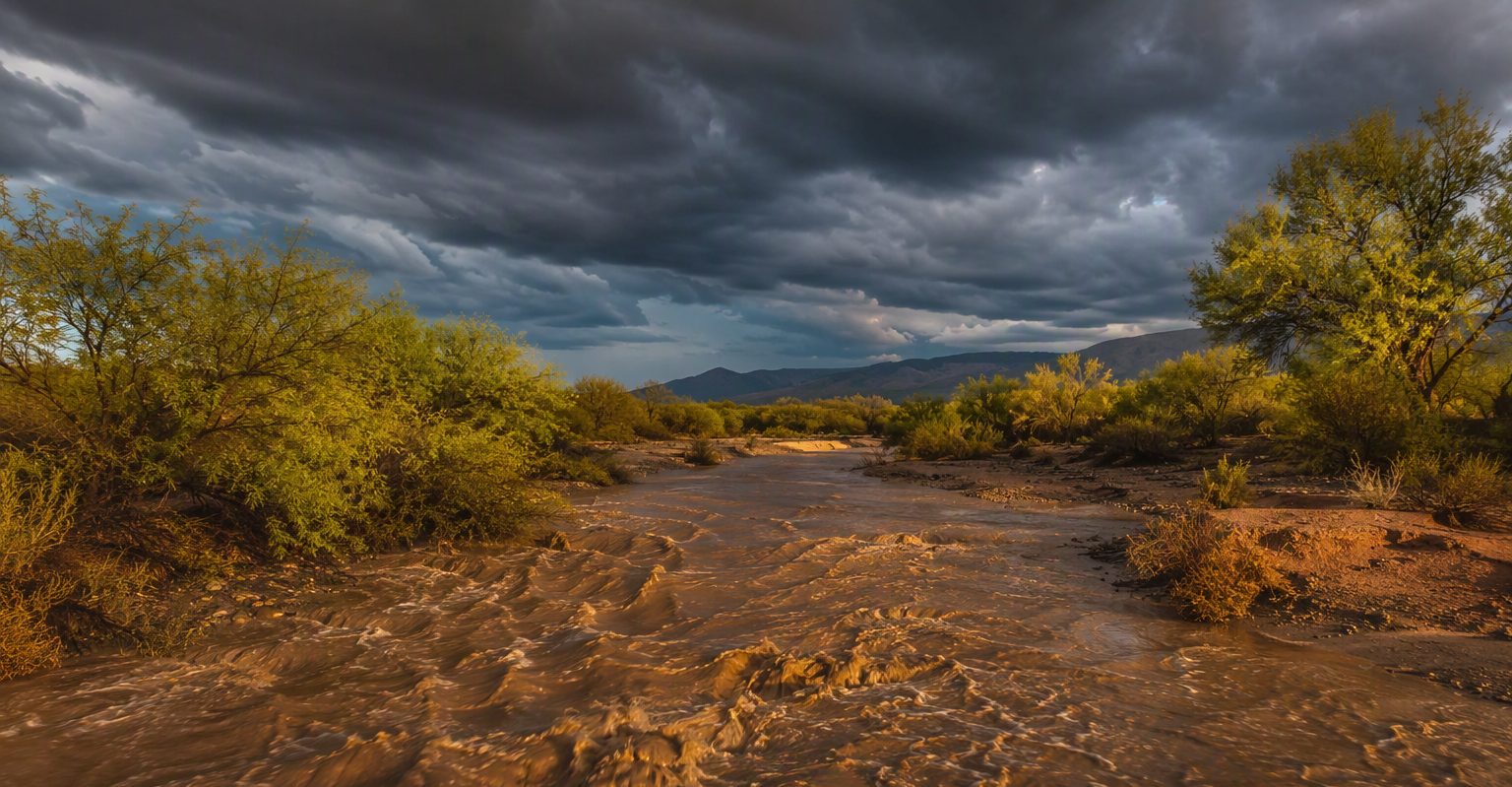
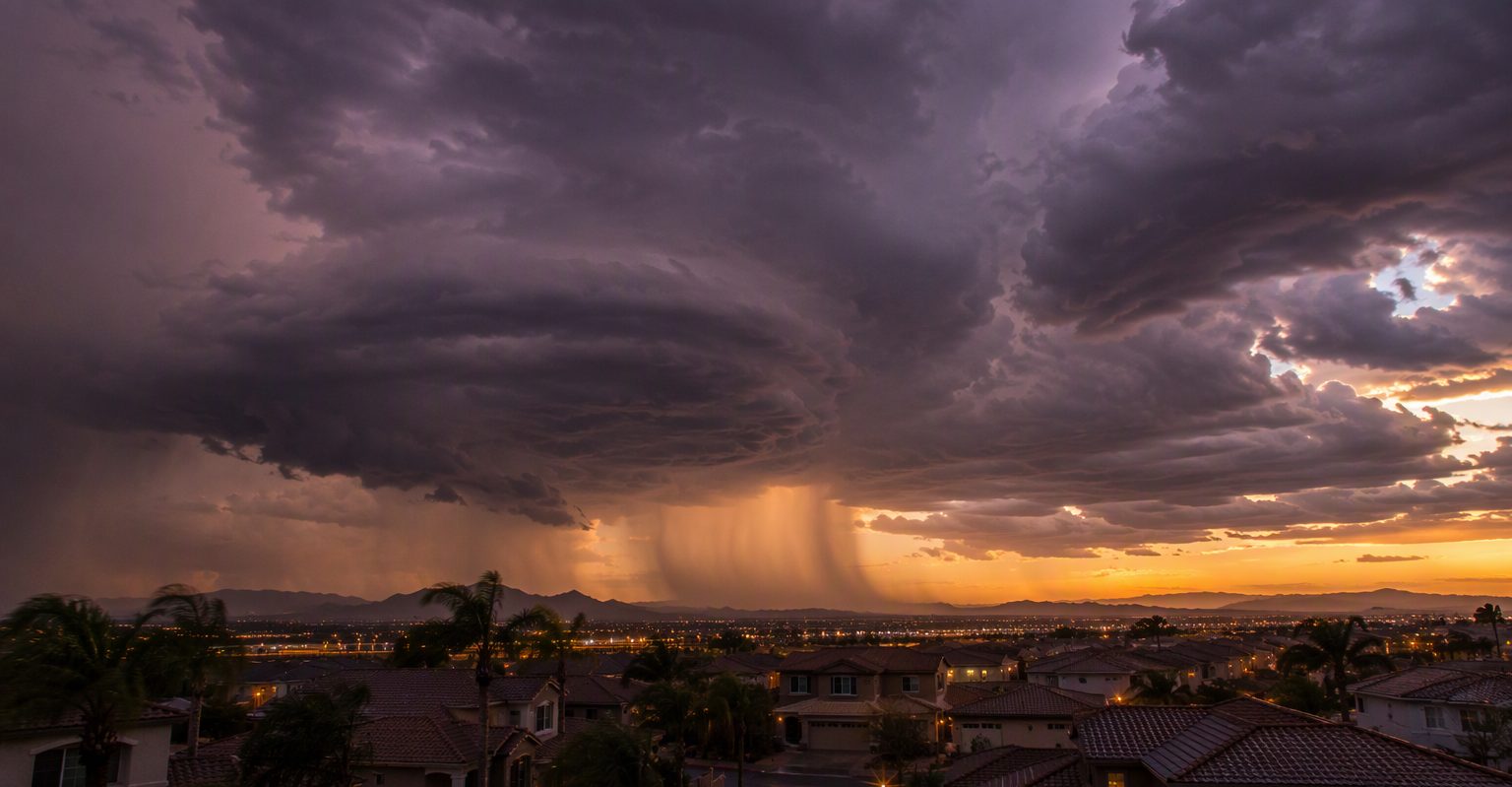
Mid-June through September, the valley runs a second calendar. Haboobs roll dust walls ahead of the cells, microbursts drop straight-line winds on four blocks and skip the fifth, and the classic monsoon hour — an inch of rain on ground that can’t absorb it — tests every roof in the county at once. The roofs that fail in August were losing in May; the season just files the paperwork. Here’s why, and what the quiet months are for.
The underlayment nobody sees
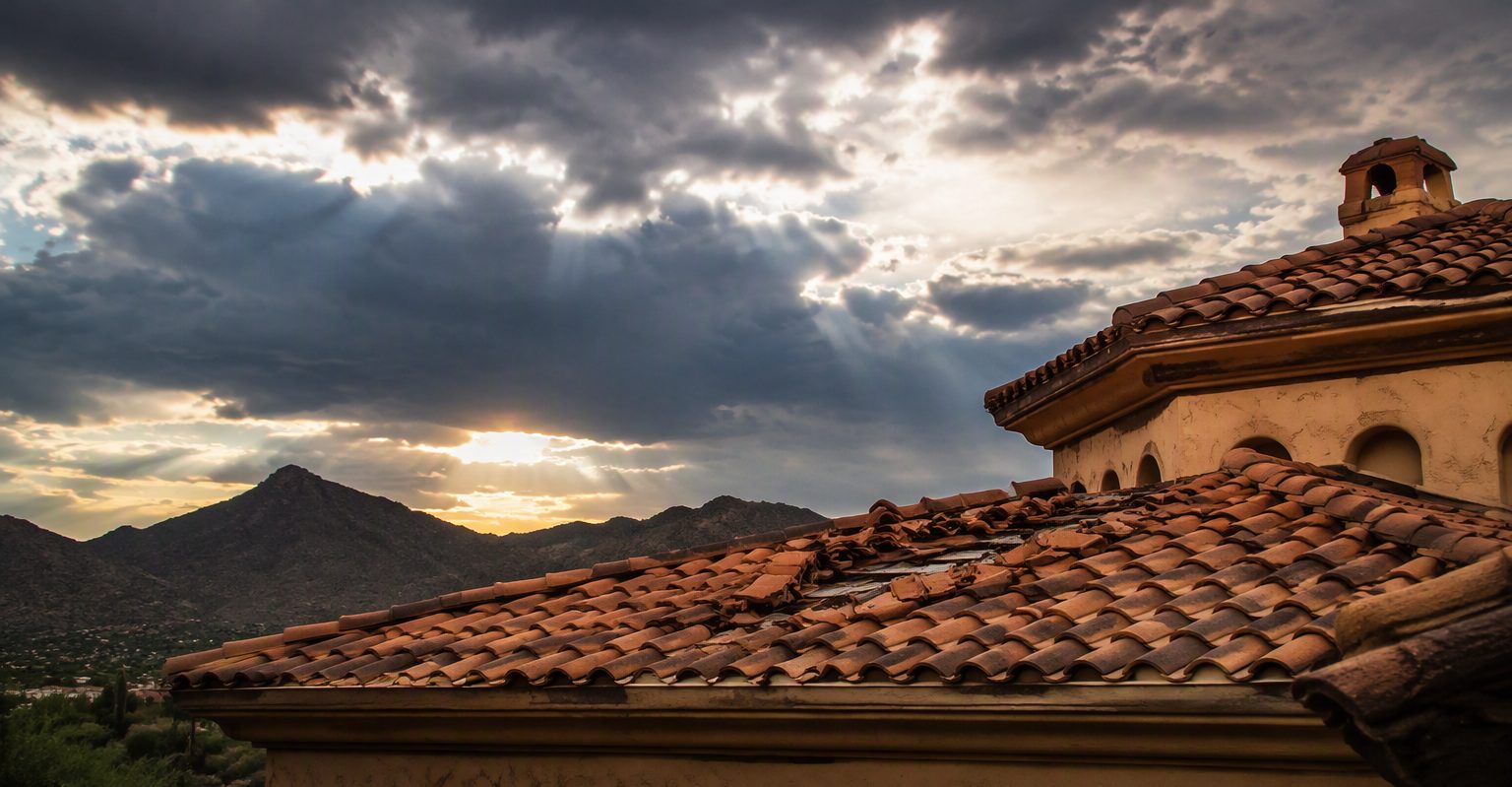
Tile roofs hide their failures beautifully. The tile you admire from the street is the armor; the waterproofing is the underlayment underneath — and after a decade or two of desert sun, it’s baked brittle. A cloudburst sheds fine off healthy underlayment. The same rain under displaced tiles, over crumbled felt, is a slow admission that confesses as a ceiling ring a week later. If your roof is fifteen-plus years in and has never been checked, the underlayment is the appointment to make — before the season makes it for you.
Wind-driven rain plays by different rules
Monsoon rain doesn’t fall; it arrives sideways. Water gets driven under tile edges, into ridge vents, through the sealant lines around every penetration — swamp-cooler mounts, vents, skylights, the satellite dish nobody uses. Vertical-rated details fail in horizontal rain. That’s why a roof can be “fine” for nine months of calm and leak the first real storm: the weakness was always there, and the season found it.
The flat-roof factor
Plenty of valley homes carry flat or low-slope sections — over the garage, the patio conversion, the addition. Those sections live and die by their scuppers and drains, and a haboob season’s worth of dust and debris turns a scupper into a plug. Ponding water on a flat section finds every seam. The May walk-around isn’t complete until someone looks at the flat sections with honest eyes.
The remnant-moisture wildcard
Every few seasons, a Pacific hurricane dies off Baja and sends its moisture straight up the gulf — days of soaking tropical rain in a region engineered for forty-minute cloudbursts. That’s when marginal roofs fail by the neighborhood, and when houses that never leak take water from a dozen small admissions at once. Watch the forecast when a system breaks up off the peninsula; the moisture plume is the event.
The prep window, and what’s in it
Before June: walk the roofline from the yard (or have it walked) — displaced tiles and lifted flashing are invisible from the couch. Re-seal window and door caulking; desert sun cooks it faster than the calendar suggests. Clear scuppers, swales, and drainage cuts. Photograph the house dry and intact — the before-and-after file is the strongest claim document that exists, and it only exists if you make it in May. Then, when the first cell drops: check closets, hallways, and the garage ceiling in the two weeks after, not just the living room. Roofs confess quietly at first.