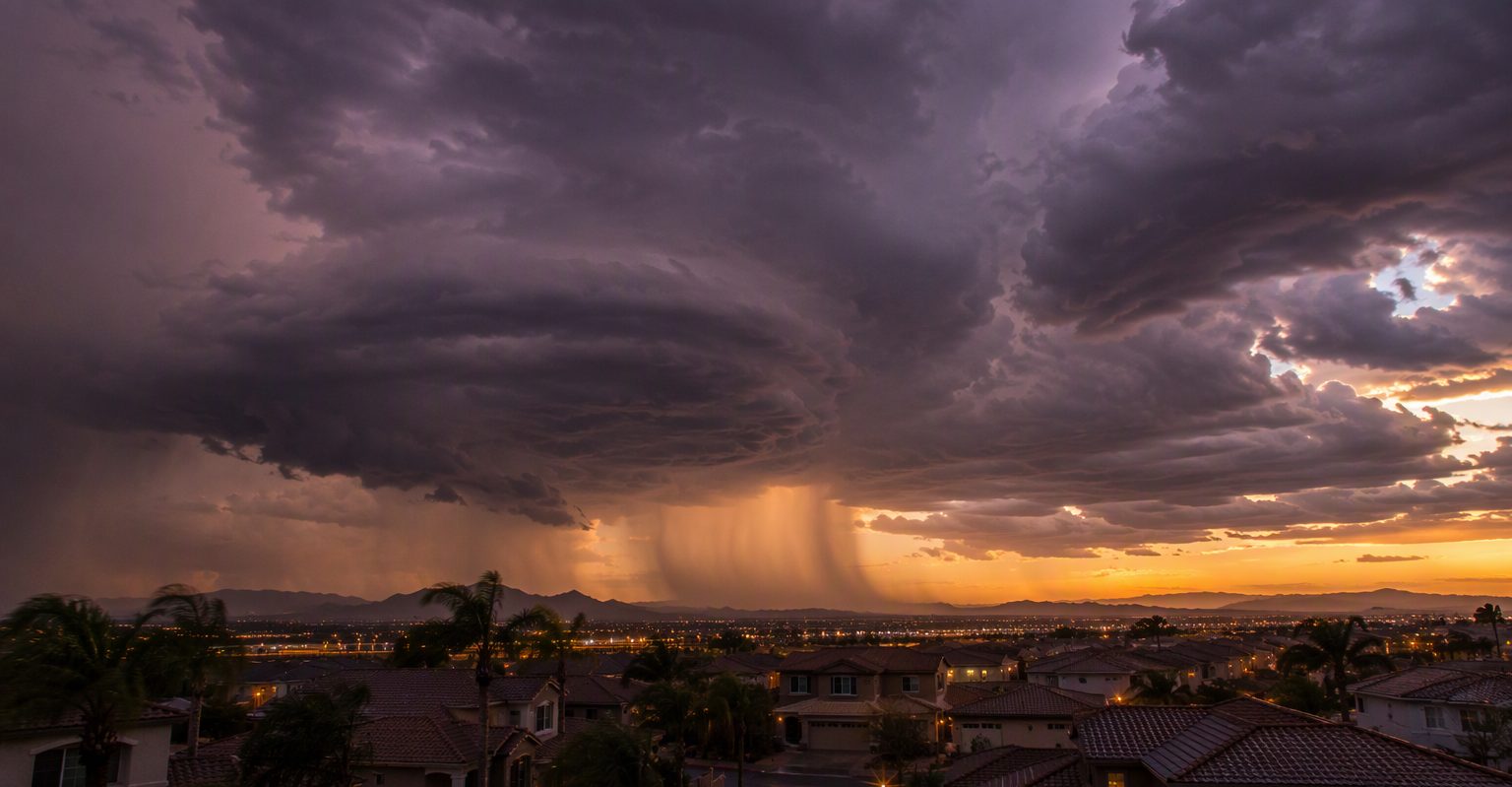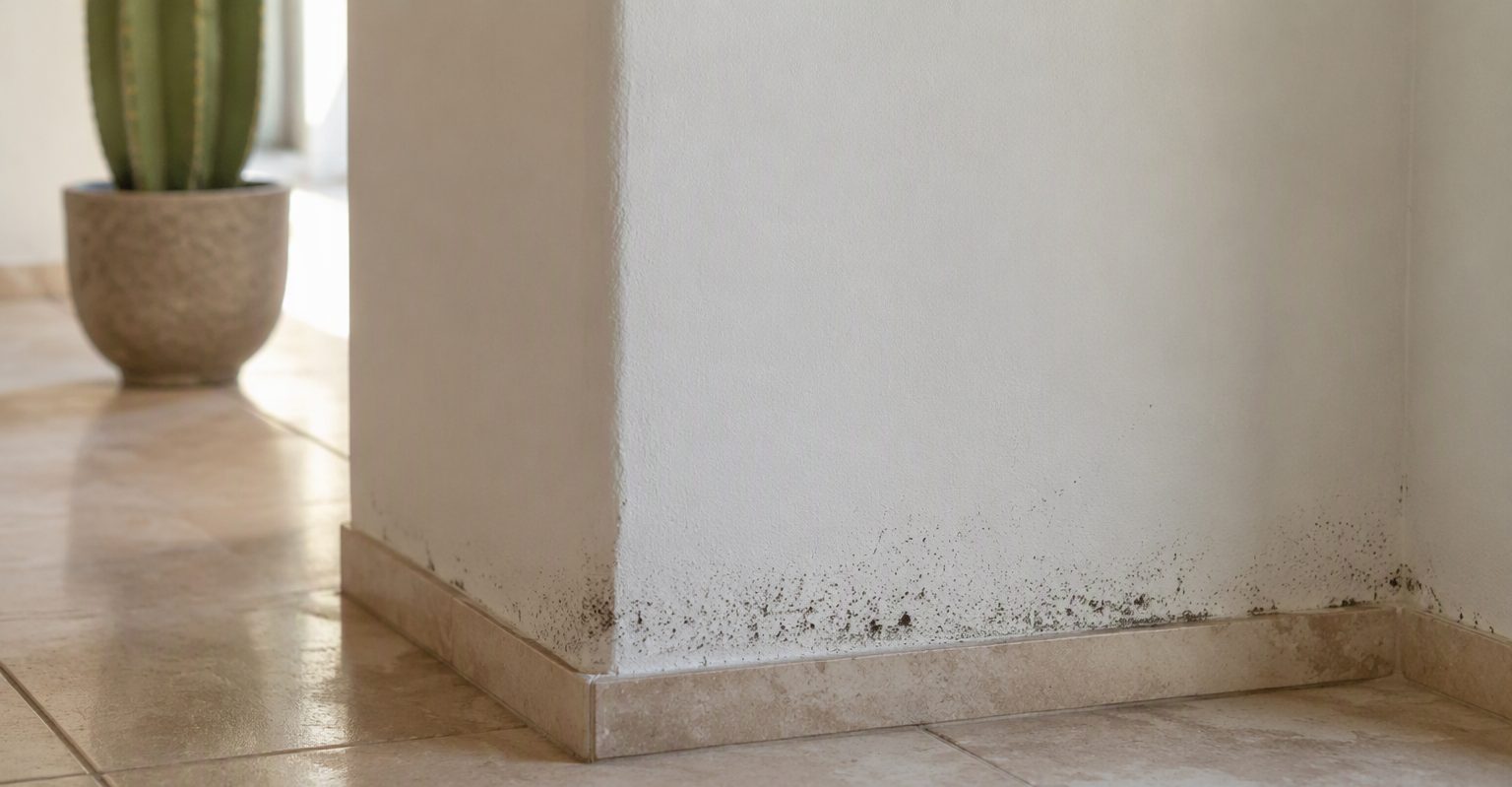

Every big monsoon cell leaves the same morning-after scene across the county: a ceiling ring that wasn’t there yesterday, a drip line down a wall, a damp patch of carpet under a skylight. The storm is over, but the loss isn’t — water that came in overnight is still sitting in the decking, the insulation, and the wall cavity, and it’s still working. The first 24 hours decide whether this stays a drying job or becomes a rebuild. Here’s the order.
Hour one: contain and document
Bucket the drip, move what’s in the splash zone, and kill the breaker if water is anywhere near outlets or fixtures. Then photograph everything before you touch anything else — the stain, the drip line, the wet floor, and the ceiling from several angles. Wide shots and close-ups. If it’s safe, one photo of the roofline from the yard. That file is the spine of the insurance claim, and it only exists if you make it before cleanup starts.
Hours two to six: stop the sky
A roof opening left open through one more monsoon afternoon doubles the water loss — and in season, the next cell is measured in days, not weeks. Emergency tarping is the move; it’s temporary by design and it makes every later step possible. This is also the window to call: post-storm schedules fill in the order the calls come in, and the extraction slot you want is the one somebody else is booking while you deliberate.
The part nobody sees: where the water actually went
A ceiling stain is where the water gave up, not where it entered. Rain driven under tile travels along the underlayment, down a rafter, across the decking — it can enter above the bathroom and confess in the hallway. The wet footprint in the attic is always larger than the stain downstairs. That’s why the first visit starts with a moisture map of the deck, the insulation, and the wall cavities below: drying the room with the stain and missing the cavity next to it is how a roof leak becomes a mold job by fall.
Drying upward is different
Roof leaks saturate from the top down — decking, insulation, ceiling drywall — and overhead drying has its own rules. Wet insulation usually comes out (it never regains loft and it holds moisture against the drywall); the cavity dries with directed airflow; readings come off the decking and framing, not the painted surface. Three to five days of equipment is typical once the opening is secure. The meter says when it’s done — not the calendar.
The claim side, briefly
Rain entering through a sudden, storm-created opening is typically a homeowners claim; wear-and-tear failure of aged underlayment is usually treated as maintenance. The documentation you made in hour one is what separates the two conversations. File promptly, describe what you saw plainly, and let the measurements do the arguing. The storm gets the headline. The water does the damage. Handle the water.