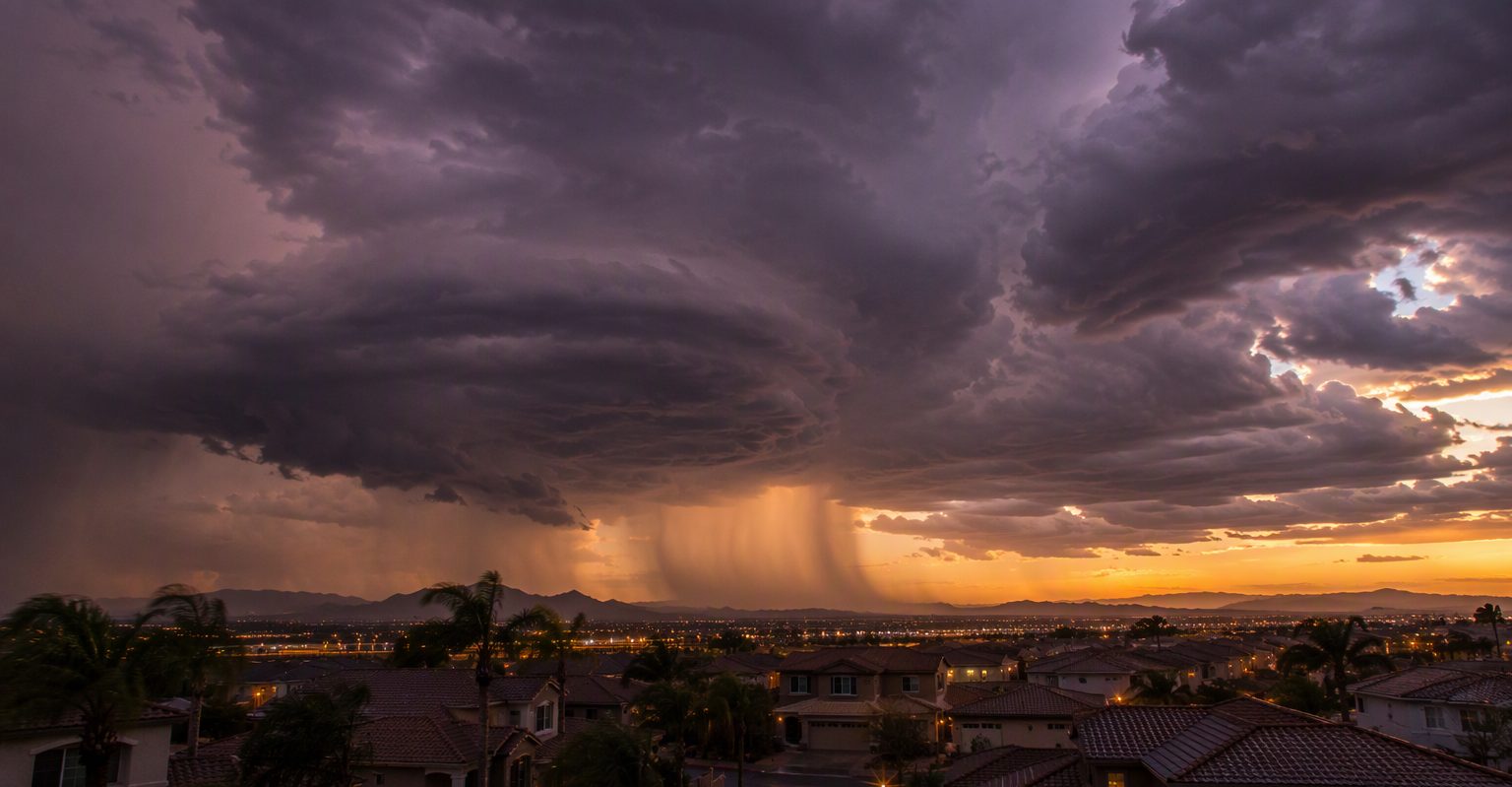
Yuma exists because of a river crossing — the one dependable place to ford the Colorado. The same water geography that built the town still runs it: the river at the edge, canals through the middle, washes laced across the desert floor. When monsoon storms arrive, all three systems wake up at once. Here’s how river-country flooding actually gets inside houses, and what works against it.
The physics: the ground says no
A few inches below most valley lots sits mineral hardpan — closer to concrete than to soil. Rain that would soak into a Midwest lawn in an hour sheets off it like it fell on a parking lot. A one-inch monsoon hour — unremarkable by monsoon standards — turns into a moving sheet of water looking for the lowest point on the street. If that low point is your slab edge or your sliding-door track, that’s where it goes.
Three water systems, one bad afternoon
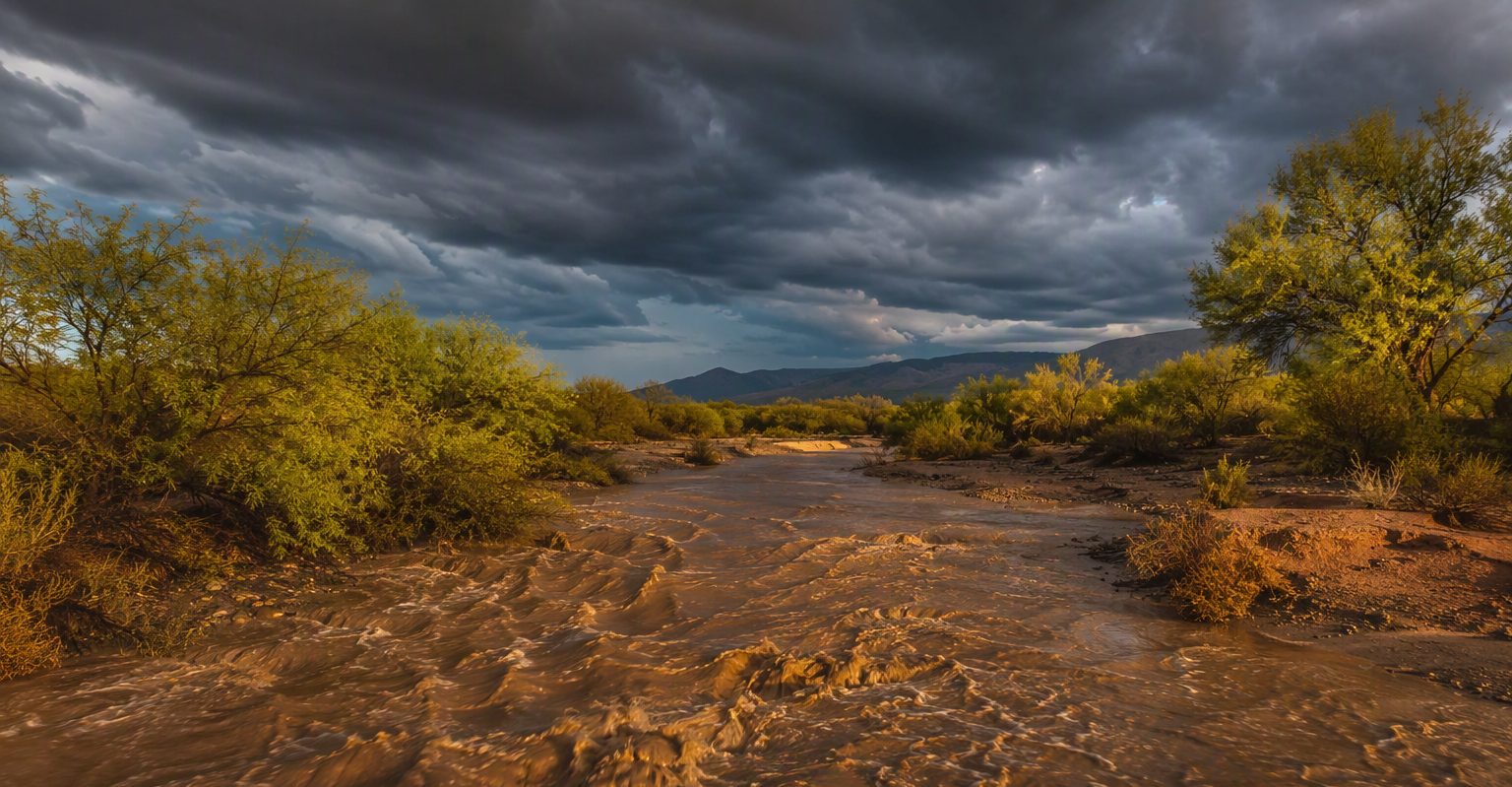
The washes run first — sandy arroyos dry fifty weeks a year that go bank-to-bank in a hard storm and test every home built near one. The canal grid follows: a breached gate or over-topped lateral sends irrigation water through yards on a schedule nobody planned. And along the Colorado itself, river-bottom neighborhoods watch the gauge when a big remnant system stacks days of rain upstream. Streets become channels; the gutter line is a river with curbs.
The two-minute flood
Entry is usually unglamorous: water rises against the sliding-door track until it weeps over the rail, pushes under the garage door’s bottom seal, or finds the one low spot where stucco meets grade. It doesn’t need to be deep — a half-inch across forty feet of living room is a carpet, a pad, and four baseboards. And because it’s runoff, it arrives contaminated with soil, organic matter, and whatever the street was carrying — which is why flood cleanup includes sanitation that a plumbing loss doesn’t.
The prep that actually matters
Know your slab height relative to the curb — that six-inch number is your flood line. Keep swales and drainage cuts clear; a summer’s worth of wind-blown debris turns a designed drainage path into a dam. Door thresholds and garage seals are consumables in desert sun — replace them before they’re tested. And if you’re in a known runoff path, flood insurance isn’t a paranoia purchase here; it’s a thirty-day-waiting-period purchase, which means buying it during monsoon is buying it too late.
When it gets in anyway
Safety first — water near outlets gets the breaker killed before anyone wades in. Photograph the waterline on every wall before it recedes. Then call: extraction the same day, sanitation because it’s runoff, and drying verified by meter. The desert will convince you it handled things. The meter is the tiebreaker — and it’s the only version your future self can trust.